

Calorie Calculator: Find Your Daily Calorie Needs
How to Figure Out Your Daily Calories Without Making It Complicated
Most people don’t start tracking calories because they’re excited about it.
They usually start because something isn’t working.
Maybe the weight isn’t changing. Maybe energy feels low. Or maybe they’ve tried a few diets and none of them really stuck. At some point, it becomes obvious that guessing isn’t helping.
That’s usually where the idea of a calorie calculator comes in.
Not as some advanced fitness tool, but just as a way to get a basic answer to a simple question: how much should I actually be eating?
And honestly, that one answer clears up a lot of confusion.
Calories Are Simple… Until They Aren’t
At a basic level, calories are just energy. Nothing fancy about it.
Your body uses energy all the time, even when you’re not doing anything noticeable. Breathing, thinking, digesting food—those things don’t stop.
So food becomes fuel. You eat, your body uses what it needs, and anything extra gets stored.
That’s the part everyone knows.
What’s easy to miss is how small differences add up.
An extra snack here, slightly bigger portions there, a drink you didn’t count—it doesn’t feel like much in the moment. But over time, it builds.
That’s why people feel like they’re “not eating that much” but still not seeing results.
Why Most People Misjudge Their Intake
This happens more than people think.
It’s not about lying or being careless. It’s just hard to estimate food properly without a reference.
Think about it:
- Portion sizes aren’t consistent
- Home-cooked meals vary a lot
- Eating out makes it even harder
So what feels like 1,800 calories could actually be 2,300 without realizing it.
That’s why having a baseline helps.
What the Calorie Calculator on Skarry Actually Does
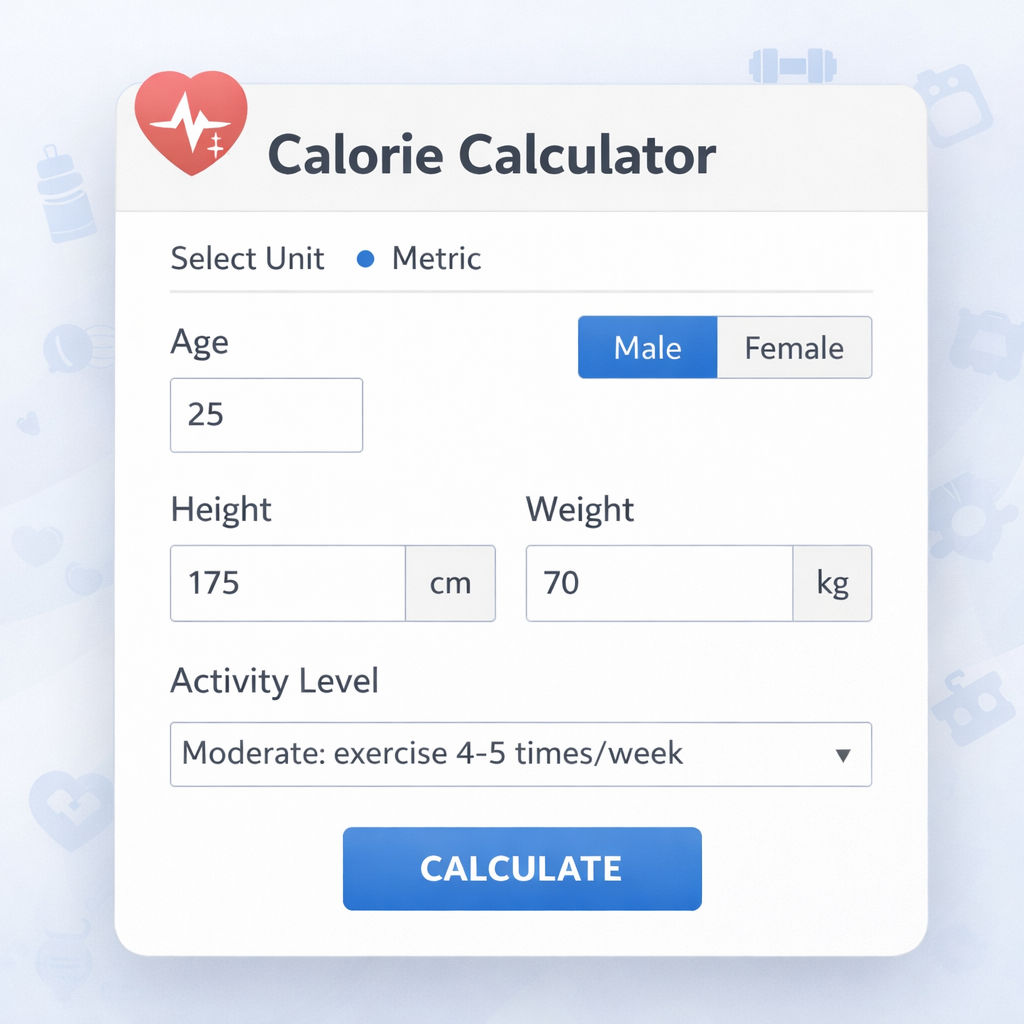
It takes a few simple inputs:
- Age
- Gender
- Height
- Weight
- Activity level
And turns them into a daily calorie estimate.
For example:
- Age: 25
- Height: 175 cm
- Weight: 70 kg
- Activity: Moderate (exercise 4–5 times/week)
That’s enough to generate a number that’s surprisingly useful.
Not perfect, but definitely better than guessing.
That Number You Get — What It Really Means
Let’s say the calculator gives around 2,300 calories.
That number isn’t a rule. It’s more like a reference point.
It means:
If you eat around that amount consistently, your weight will probably stay about the same.
From there, you adjust based on your goal.
If the Goal Is to Lose Weight
You don’t need to drop calories drastically.
That’s usually where people go wrong.
If maintenance is around 2,300, then something like 1,900–2,000 is enough.
It doesn’t feel extreme, and that’s the point. It’s easier to stick to.
If the Goal Is to Gain Weight
Same idea, just slightly higher.
Instead of trying to force huge meals, just increase gradually.
Something like 2,600–2,800 works better than jumping too high too fast.
If the Goal Is Just to Maintain
This sounds easy, but it’s actually where awareness matters most.
Small habits make a difference here.
Eating slightly more every day without noticing can slowly push things off track.
Activity Level Is Where People Slip Up
This part doesn’t seem important at first, but it really is.
If someone works out regularly but chooses “sedentary,” the result will be lower than it should be.
Then they follow that number, feel tired, and think something is wrong.
On the other hand, overestimating activity can lead to eating more than needed.
So this one input matters more than it looks.
Using the Calorie Calculator in a Real Way
The process itself is simple.
Enter your details, get your number.
But what matters is what happens after that.
Instead of trying to be perfect, just follow the number loosely for a couple of weeks.
Not exact tracking. Just awareness.
That alone changes how you approach food.
A Small Shift That Makes a Big Difference
Instead of thinking:
“What should I eat?”
It becomes:
“How does this fit into my daily intake?”
That one shift makes decisions easier.
You don’t need to cut everything. You just balance things.
Where Other Tools Come In Naturally
Calories give a base, but sometimes you need a bit more context.
Understanding Body Range
A BMI calculator helps give a general idea of where you stand.
It’s not perfect, but it adds perspective.
Tracking Change Over Time
Weight changes slowly.
Using a percentage calculator helps make sense of progress instead of just staring at numbers.
Common Mistakes That Don’t Feel Like Mistakes
This is where things get interesting.
A lot of people think they’re doing everything right.
Being Too Strict Too Early
Trying to eat perfectly from day one usually doesn’t last.
It feels good for a few days, then it becomes tiring.
Ignoring Small Extras
Things like sauces, drinks, or quick snacks don’t seem like much.
But they add up faster than expected.
Changing Plans Too Often
Switching strategies every week makes it hard to see what’s working.
A More Realistic Way to Approach It
Instead of going all-in, think of it as adjusting.
Start with your number.
Follow it roughly.
Observe what happens.
Then adjust slightly.
That’s it.
What Progress Actually Looks Like
It’s rarely dramatic.
Sometimes weight drops a bit, then stays the same for a while.
Sometimes it goes up slightly before going down again.
That’s normal.
The goal isn’t instant results. It’s consistency.
Why This Works Better Than Complicated Diets
Because it’s flexible.
You’re not cutting entire food groups.
You’re not following strict rules.
You’re just working with a number.
And that makes it easier to stick to.
A Quick Reality Check
No calculator is 100% accurate.
Bodies are different.
Metabolism varies.
Lifestyle matters.
But even with all that, having a number is still better than guessing.
Try It Without Overthinking
Instead of reading more about it, just try it.
Use the calorie calculator on Skarry.
Enter:
- Age
- Height
- Weight
- Activity level
Take the result and follow it casually for a couple of weeks.
Don’t stress about being exact.
Just stay aware.
What Usually Happens When You Do This
Something interesting.
You start noticing patterns.
You realize when you’re eating more than you thought.
You understand why some days feel better than others.
And slowly, things start making more sense.
Final Thoughts
A calorie calculator isn’t meant to control everything.
It’s just there to give direction.
Without it, everything feels random.
With it, things become clearer.
One Last Thing (This Matters More Than Anything)
Don’t aim for perfect.
Aim for consistent.
Even if it’s slightly off, but done regularly, it works better than doing everything perfectly for a few days and then stopping.
Popular Tools
Recent Posts
.png)
