

CPM Calculator Guide: Calculate Cost, CPM, and Impressions
How to Calculate CPM and Ad Impressions
I used to think online ad earnings were pretty straightforward.
More traffic means more money. That’s what everyone says. And honestly, it sounds logical at first. But after spending some time working with websites and ad tools, I started noticing something strange.
Two pages with similar traffic could earn completely different amounts.
That’s when I realized there’s something deeper going on—and that’s where CPM comes in.
Once you understand CPM properly, along with how impressions and campaign cost connect to it, things start to click in a way they didn’t before.
Let’s Start Simple: What CPM Really Means
CPM stands for Cost Per Mille, which means cost per 1,000 impressions.
In normal words, it answers one simple question:
How much money is earned or spent for every 1,000 ad views?
That’s all CPM is trying to tell you.
The Three Numbers That Matter
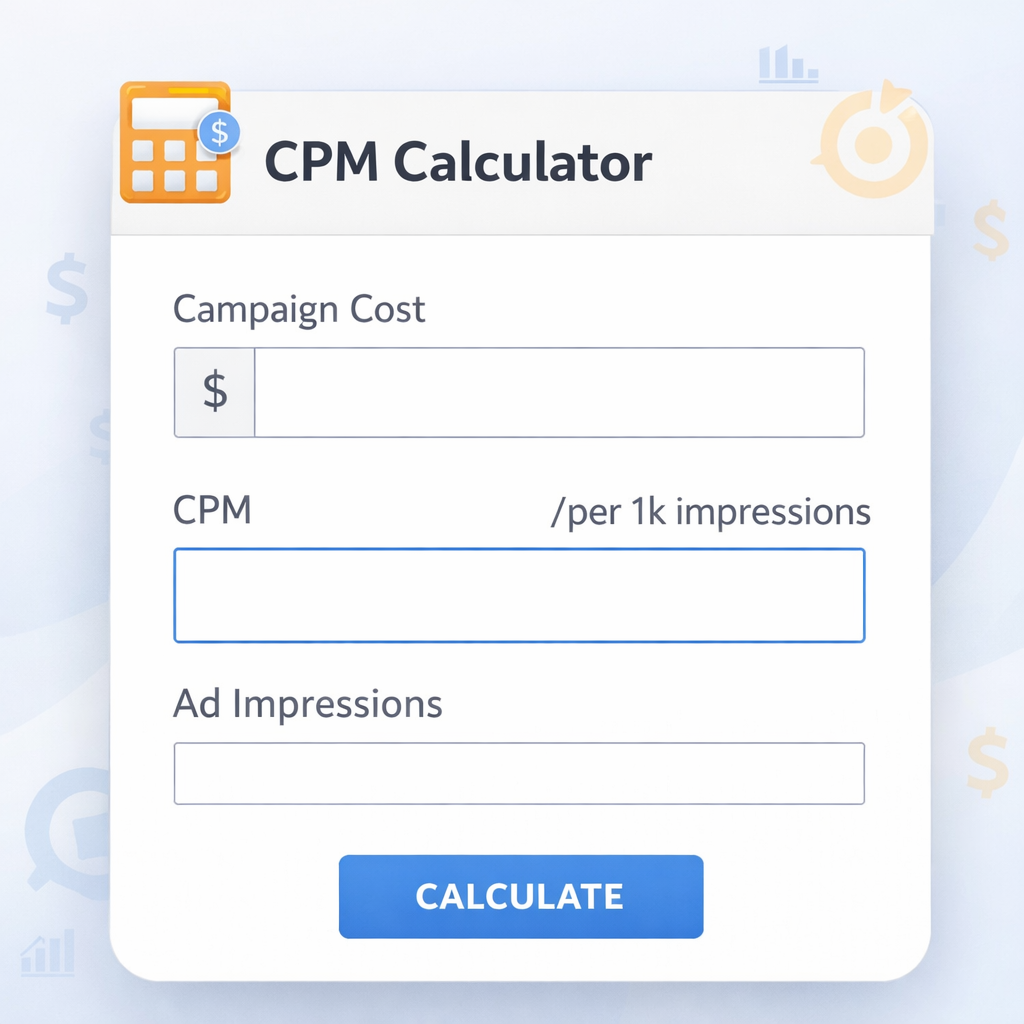
If you’re using a CPM calculator like the one on Skarry, you’re working with three main inputs:
- Campaign Cost ($)
- CPM
- Ad Impressions
These three are directly connected. If you know any two, you can calculate the third.
The Core Formula (Explained Naturally)
Instead of memorizing formulas, think of it like this:
- CPM tells you the cost for 1,000 impressions
- Impressions tell you how many times ads were shown
- Campaign cost is the total money involved
The relationship looks like this:
Campaign Cost = (CPM × Impressions) ÷ 1000
Once you understand this, everything becomes easier.
Example That Makes It Clear
Let’s say:
- CPM is $20
- Ad impressions are 50,000
Now calculate:
Campaign Cost = (20 × 50,000) ÷ 1000
Campaign Cost = $1,000
So if your CPM is $20 and you get 50,000 impressions, your total campaign value is $1,000.
When You Don’t Know Impressions
Sometimes you know:
- Campaign cost
- CPM
But not impressions.
You can reverse the formula:
Impressions = (Campaign Cost × 1000) ÷ CPM
For example:
- Campaign Cost = $500
- CPM = $10
Impressions = (500 × 1000) ÷ 10
Impressions = 50,000
This is exactly the kind of calculation where using the CPM calculator on Skarry saves time instead of doing it manually.
Why These Numbers Actually Matter
At first, it might feel like just math. But these numbers directly affect how much you earn or spend.
Let’s look at a simple comparison:
- Website A → CPM $15 → 100,000 impressions → earns $1,500
- Website B → CPM $60 → 100,000 impressions → earns $6,000
Same traffic. Completely different results.
That’s why understanding CPM is so important.
Where You’ll See This in Real Life
Once you start paying attention, you’ll see this everywhere.
Blogging and Ad Revenue
If you run a blog, your earnings depend on both impressions and CPM.
You might have a page getting traffic, but if CPM is low, earnings stay low.
YouTube Monetization
On YouTube, CPM tells you how much advertisers are paying for your audience.
Even though creators see RPM, CPM is still the foundation behind it.
Paid Advertising Campaigns
If you’re running ads, CPM tells you how much it costs to reach people.
Lower CPM means:
- More reach
- Better efficiency
What Affects CPM in Real Situations
This is where things get interesting.
CPM is not fixed. It changes depending on several factors.
Your Content Topic
Some topics naturally attract higher-paying advertisers.
For example:
- Finance, business, software → higher CPM
- General content → lower CPM
Your Audience
Traffic from different regions has different value.
Some audiences are simply more valuable to advertisers.
Engagement
If users stay longer and interact more, your ad performance improves.
That can increase CPM over time.
Placement of Ads
Where ads appear matters a lot.
Good placement gets attention. Bad placement gets ignored.
Timing
CPM changes throughout the year.
During high-demand seasons, advertisers spend more, which increases CPM.
Why Using a CPM Calculator Makes Life Easier
You can calculate all of this manually, but let’s be honest—it gets repetitive.
If you’re checking:
- Multiple pages
- Different campaigns
- Daily reports
You’ll end up doing the same math again and again.
Using the CPM calculator on Skarry makes it instant.
You just enter:
- Campaign cost
- CPM
- Or impressions
And get the result immediately.
A Smarter Way to Use This Daily
Here’s something that actually helps in real use:
Instead of only checking total earnings, start checking relationships between numbers.
For example:
- Which pages have higher CPM
- Which campaigns are more efficient
- Where impressions are being wasted
Over time, you’ll start noticing patterns.
Connecting CPM With Other Calculations
CPM is just one piece of the puzzle.
Understanding Overall Profit
If you’re running campaigns, you also need to know whether you’re actually making money.
That’s where a profit calculator becomes useful.
Tracking Growth Over Time
If your CPM increases from $10 to $15, that’s a big improvement.
A percentage calculator helps you measure that change clearly.
Measuring Campaign Efficiency
If you’re spending money on ads, you should track returns.
A ROI calculator helps you understand if your campaigns are worth it.
Small Improvements That Make a Big Difference
You don’t need to completely change everything.
Even small changes can help improve CPM.
Improve Content Quality
Better content keeps people engaged longer.
Focus on the Right Audience
Relevant traffic performs better than random traffic.
Test Different Approaches
Try small adjustments and observe the results.
A Simple Habit That Helps
Instead of guessing, start calculating regularly.
Whenever you see numbers like:
- Earnings
- Impressions
- CPM
Take a moment and run them through the calculator.
It only takes a few seconds, but it gives you much better clarity.
Try It Yourself
At this point, it makes sense to actually test your own numbers.
Go to Skarry, open the CPM calculator, and try:
- Enter campaign cost
- Add CPM
- Or calculate impressions
You’ll immediately see how everything connects.
And once you start doing this regularly, you’ll stop guessing and start understanding.
Final Thoughts
CPM is one of those things that seems small at first, but once you understand it, it changes how you approach everything.
It’s not just about:
- Traffic
- Views
- Clicks
It’s about the value behind those numbers.
And when you combine that understanding with simple tools like a CPM calculator, things become much easier to manage.
One Last Thought
You don’t need complicated strategies to improve.
Start with understanding your numbers.
Track them. Compare them. Learn from them.
Because once you start doing that, growth becomes much more predictable—and a lot less confusing.
Popular Tools
Recent Posts
.png)
